
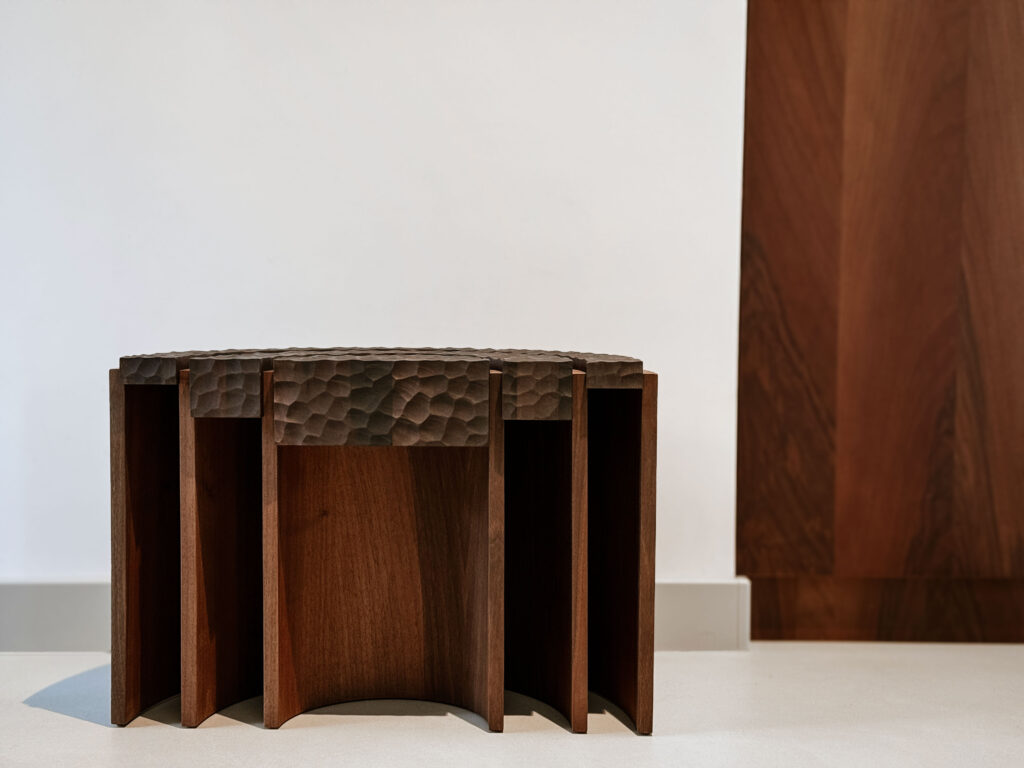
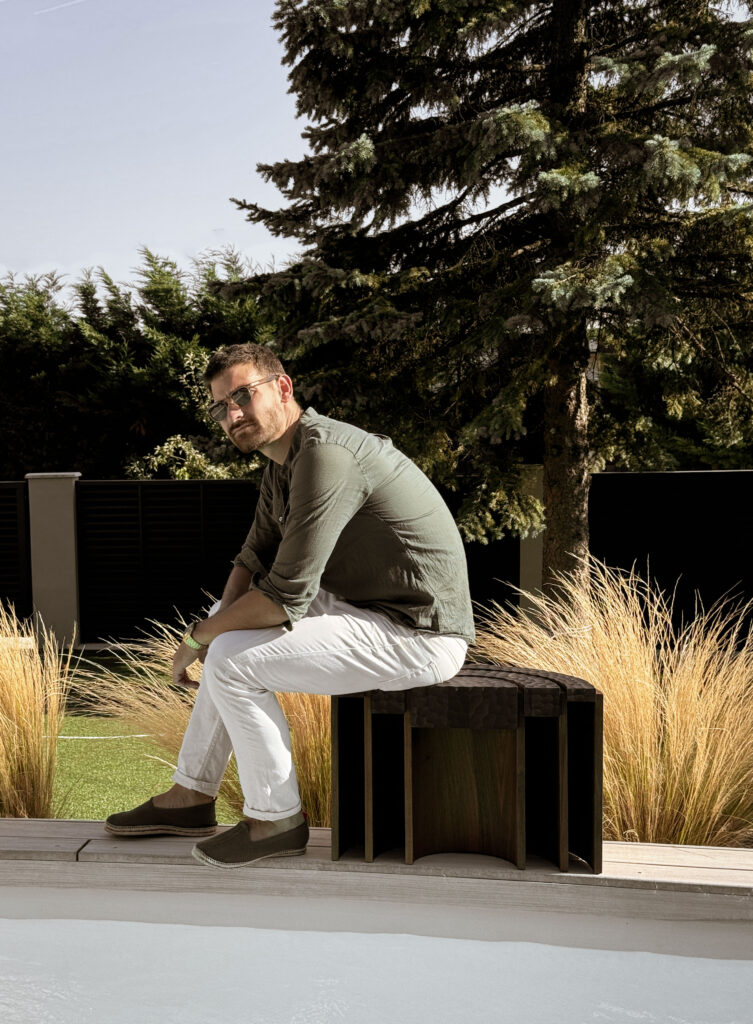
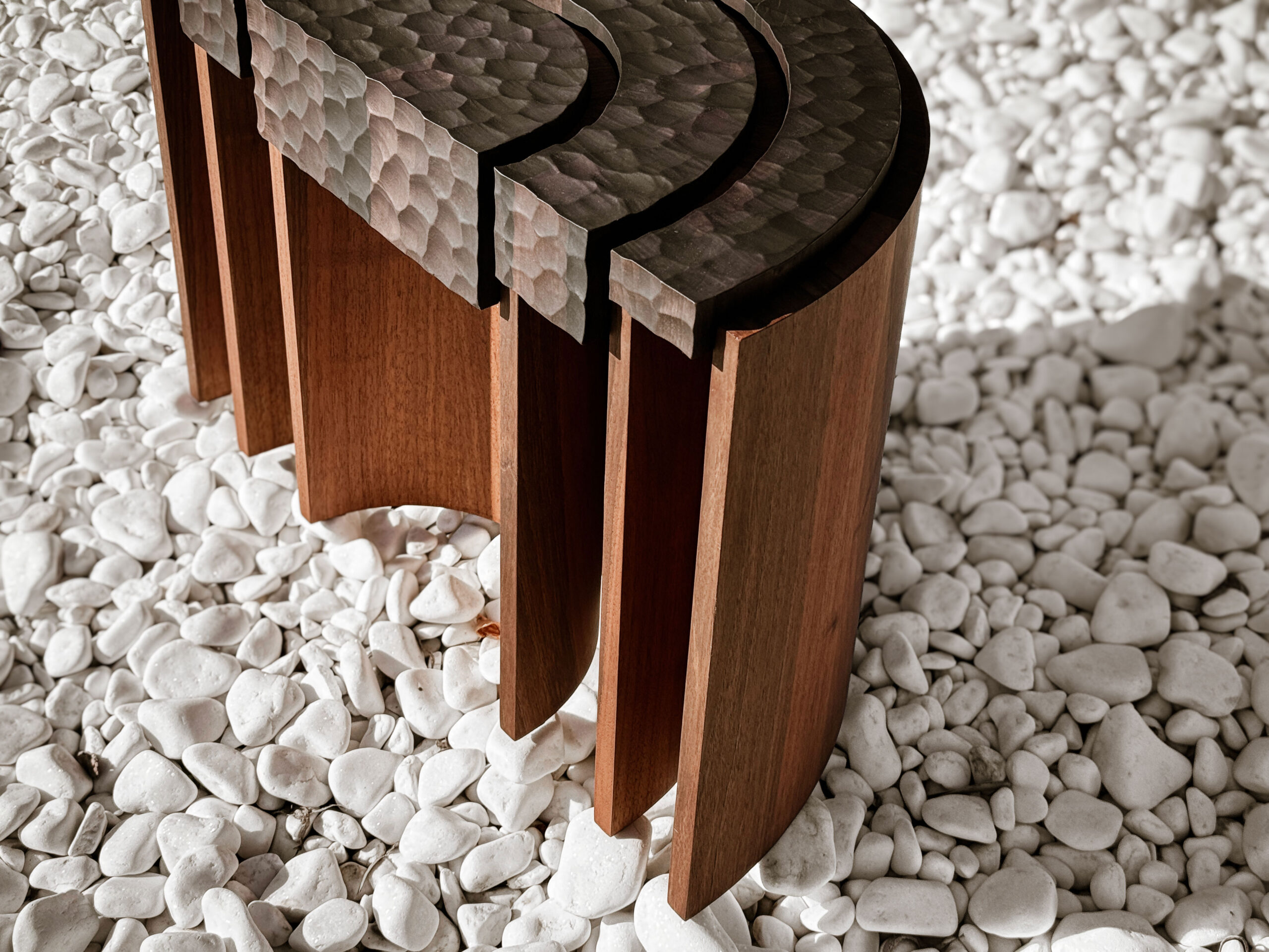
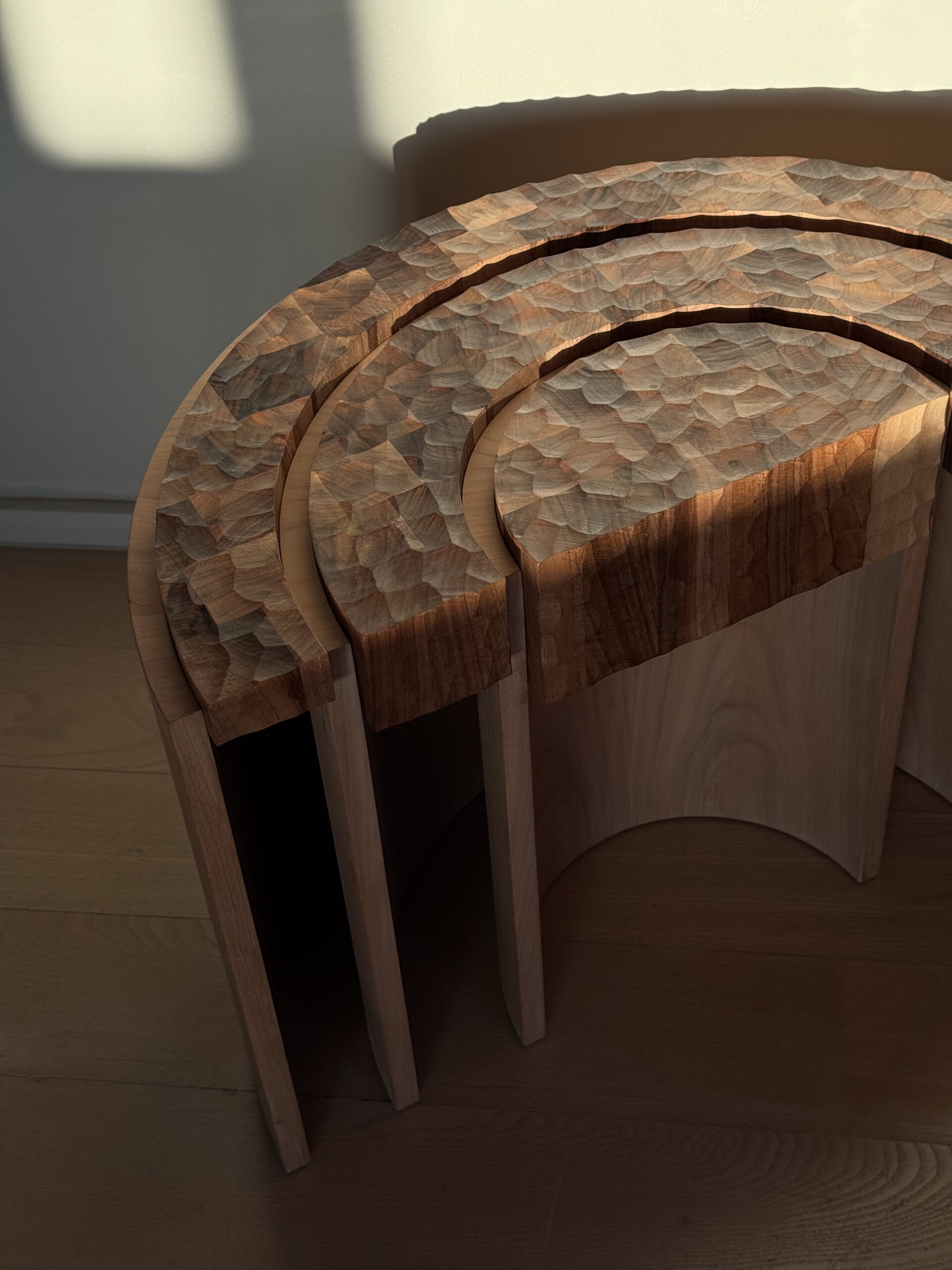
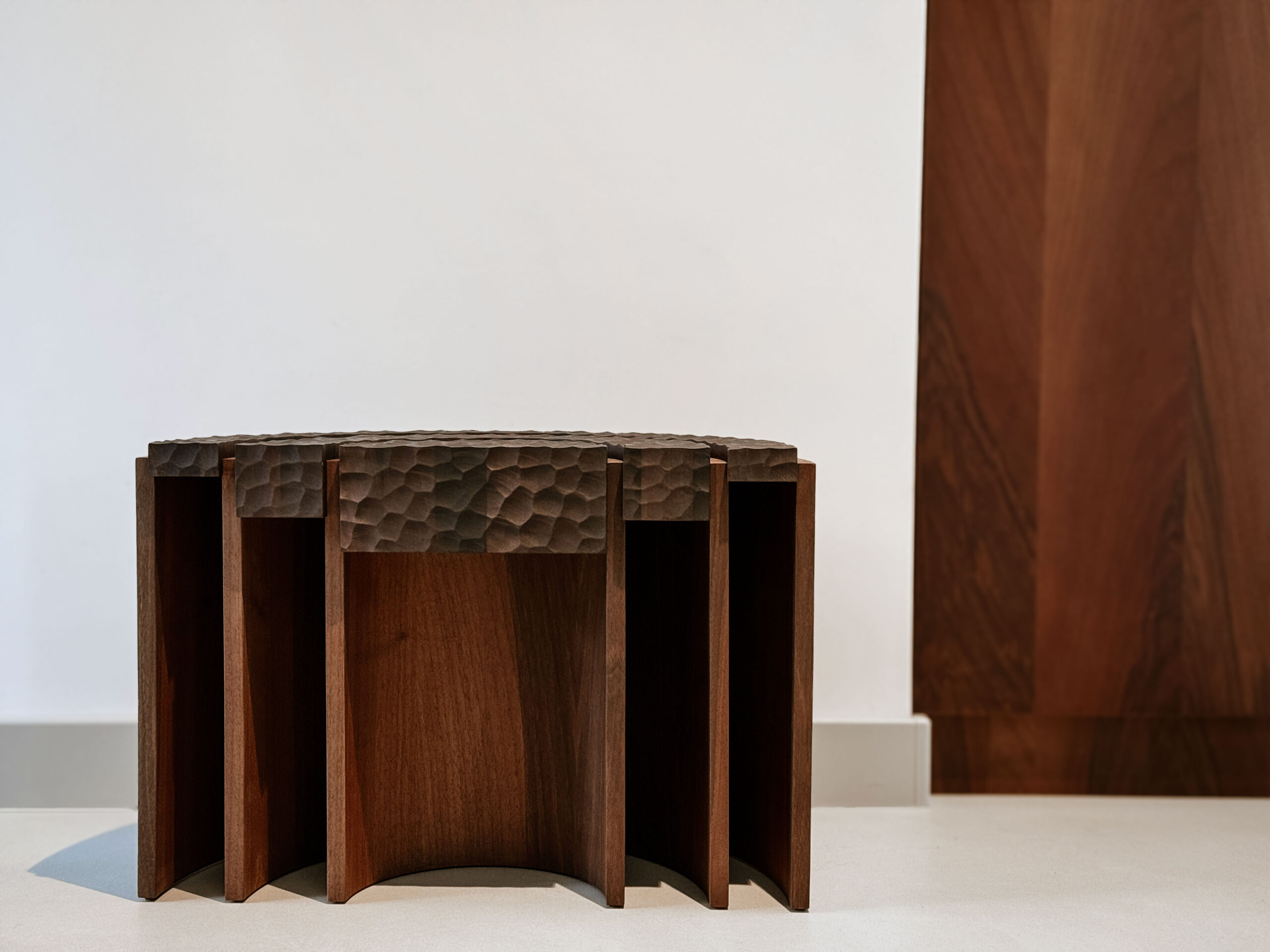
A low, self-contained volume that settles into space with quiet certainty. Plinth appears as a reduced, geometric object — recalling both an architectural base and a naturally formed mass. Its proportions remain restrained, its presence grounded, establishing a clear point without demanding attention.
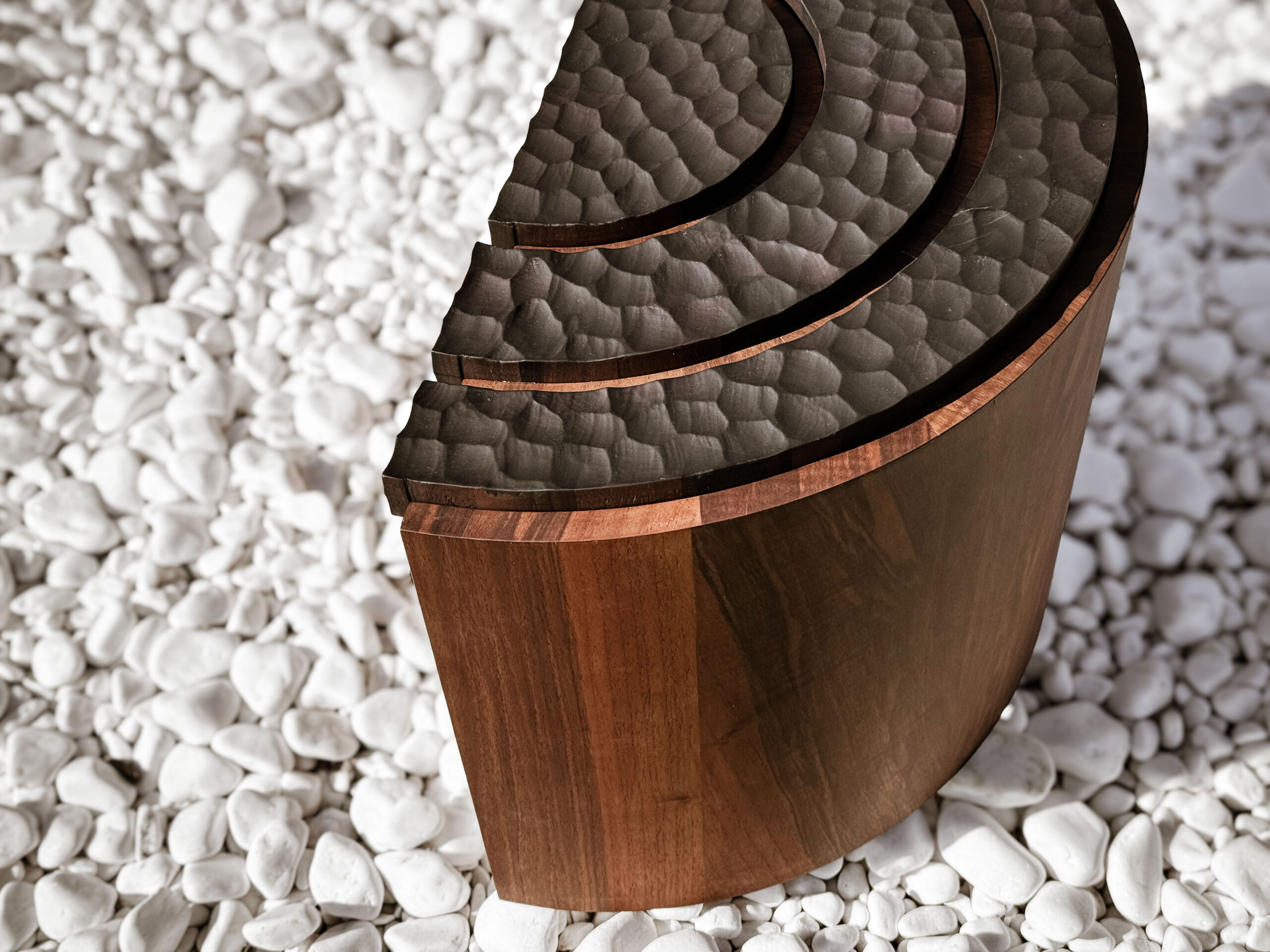
The upper surface introduces a distinct character. A naguri finish — a traditional, hand-carved texture — forms a subtly articulated top that softens the solidity of the object while refining the experience of sitting. This is not decorative, but material in essence: the depth and variability of solid wood made tangible. The naguri surface is visually held between a sequence of concentric half-cylindrical volumes, creating a tension between order and irregularity — between geometry and organic formation.
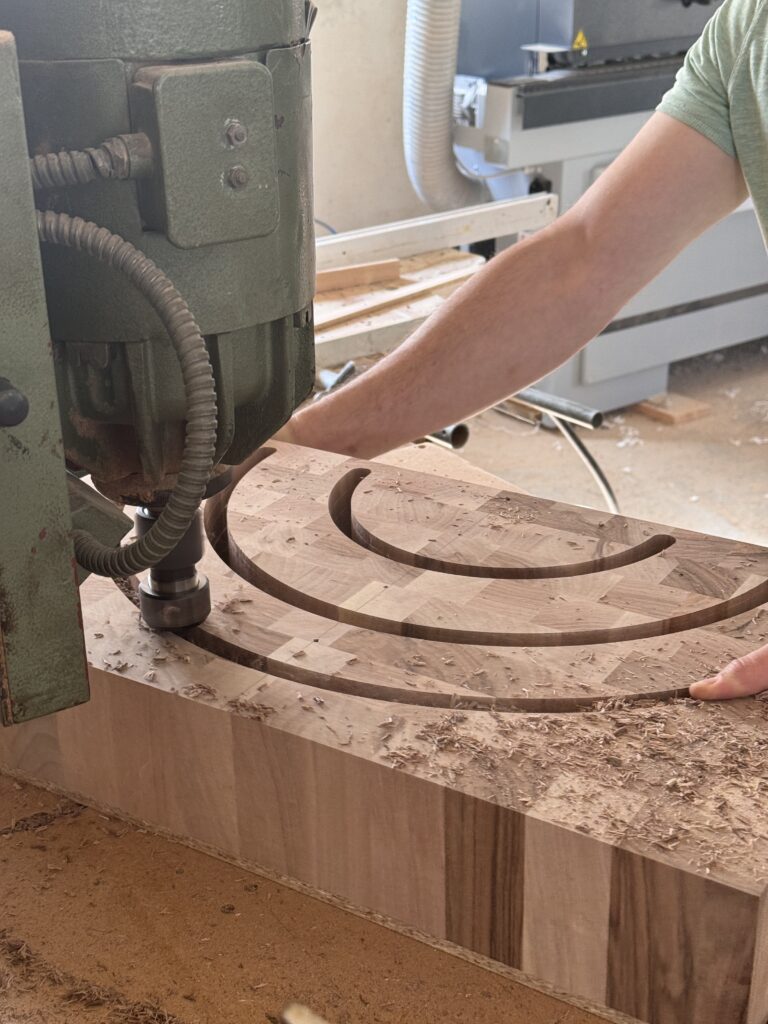
Below, the smooth, veneered half-cylindrical elements form a stable base, their continuous surfaces reinforcing the clarity of the composition. The object is part of a broader formal language, sharing its logic with the Laying Roman piece. Its construction follows a sculptural approach, where the form emerges through shaping mass rather than assembling parts.
It is not limited to a single function. It can act as a seat, a side element, or a plinth for objects — its use defined by context rather than prescription. A stable, tactile presence within a space, where material and proportion take precedence over function.
Our Other Products
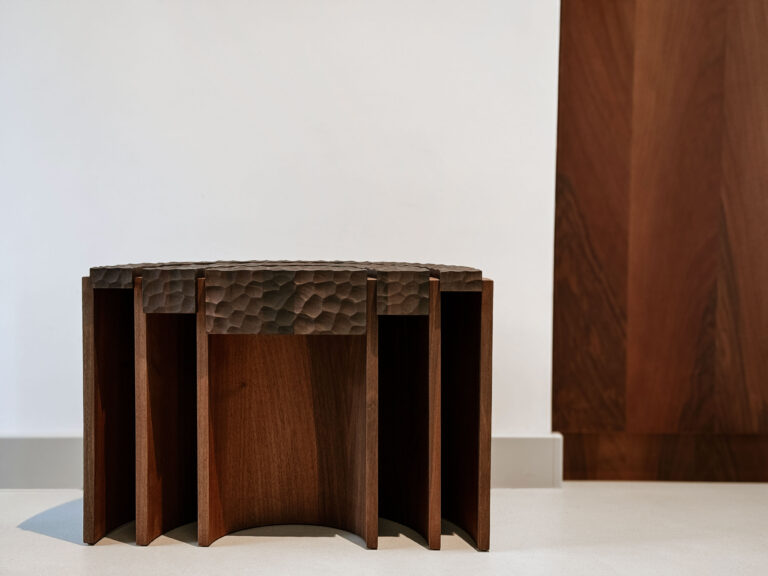
PLINTH, Postament / Bench
A compact object balancing solid mass with tactile softness — defined by natural rhythm and material depth.
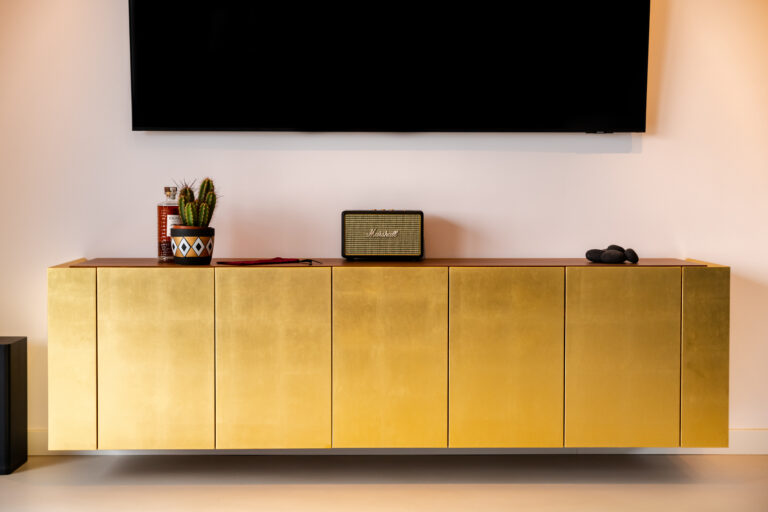
AU79, Console
The AU79 console is a balanced, material-rich piece, where gold, walnut and lacquered surfaces meet in a restrained contrast, forming a refined, quietly confident limited-edition object.
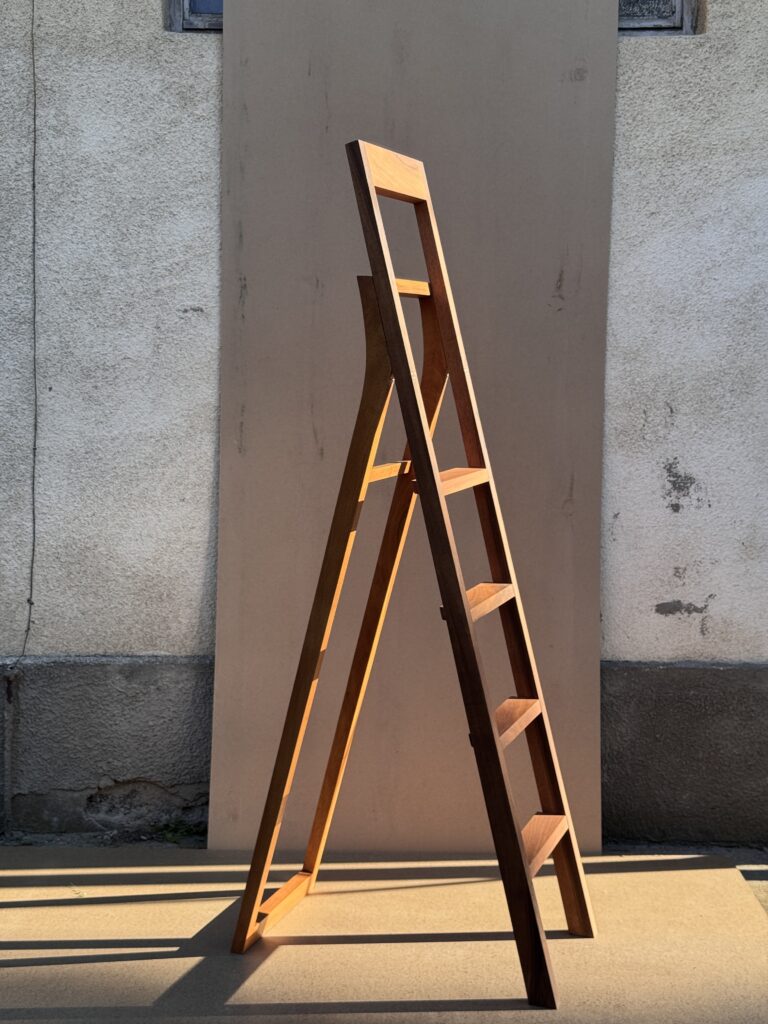
LIBRARIAN, Ladder
A solid wood and metal ladder defined by structural clarity, natural material contrast, and a balance between sculptural stillness and functional lightness.
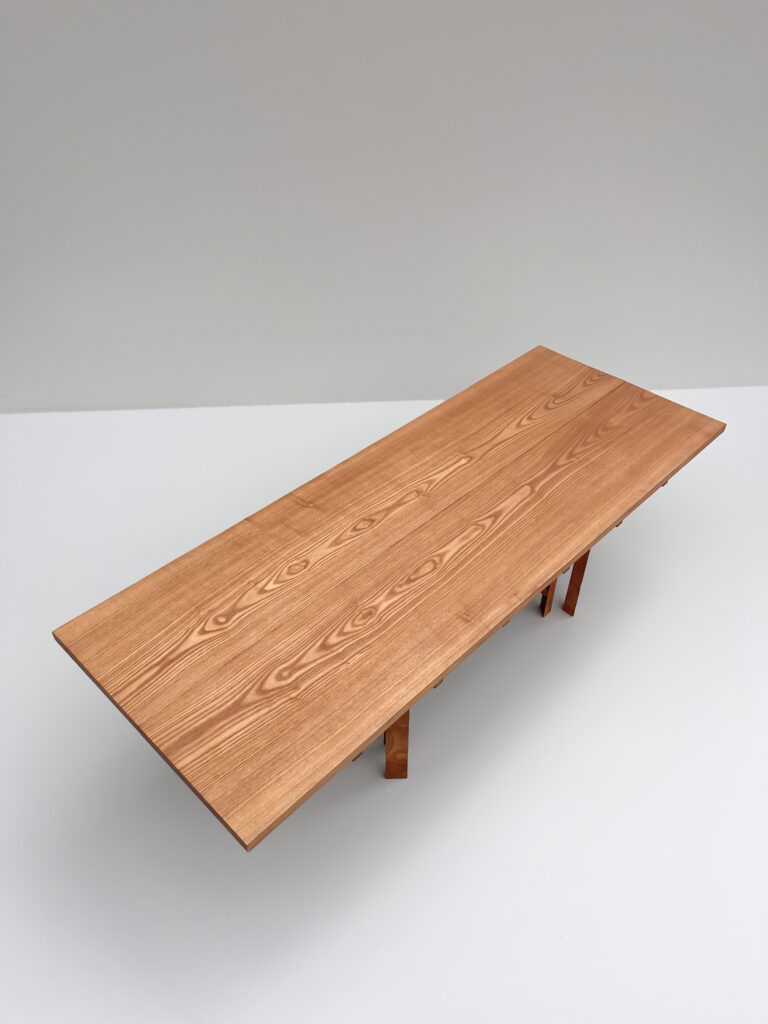
LEVI, Coffee table
A solid wood table defined by rhythmic structure, natural materiality, and a balance between weight and perceived lightness.
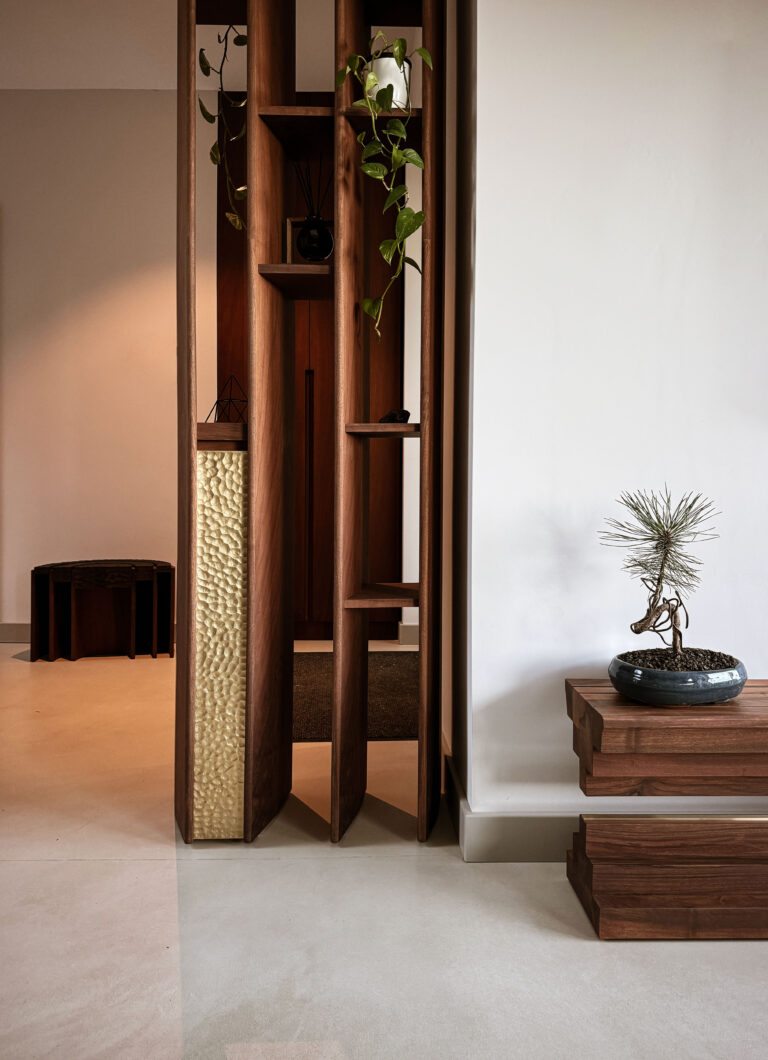
RIFT, Divider system
A vertical room divider defined by a refined structural rhythm, balancing slender lightness with a stable, grounded presence.
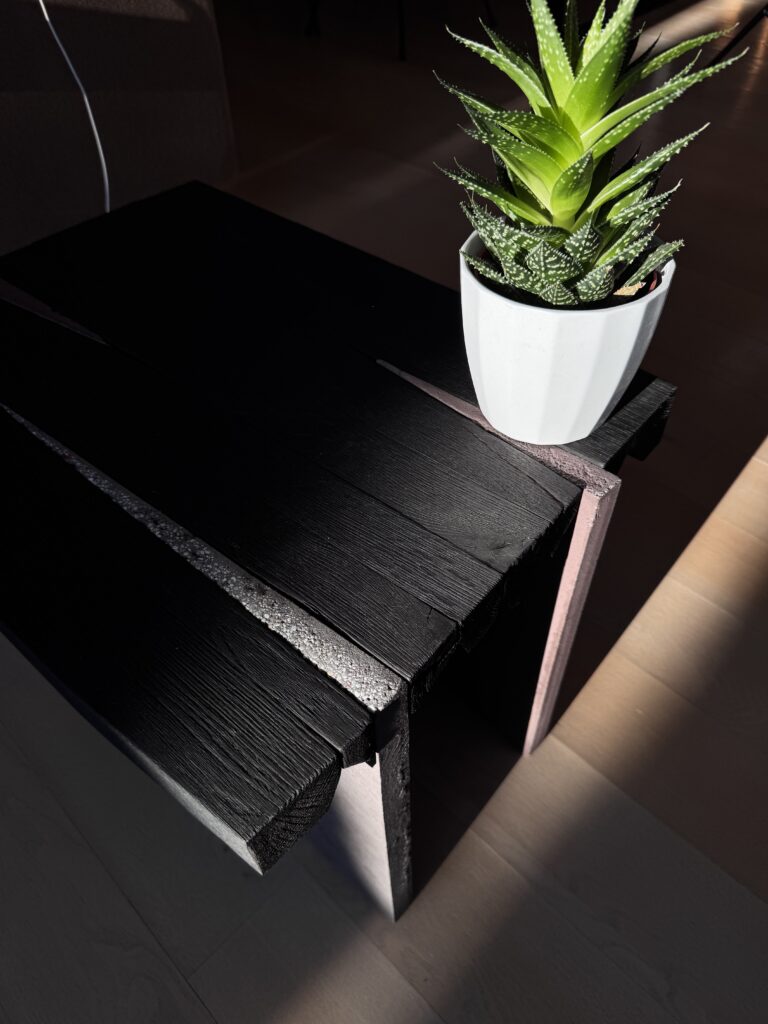
CARBON, Side table
An experimental side table defined by material contrast — balancing charred wood and raw concrete, surface and mass.
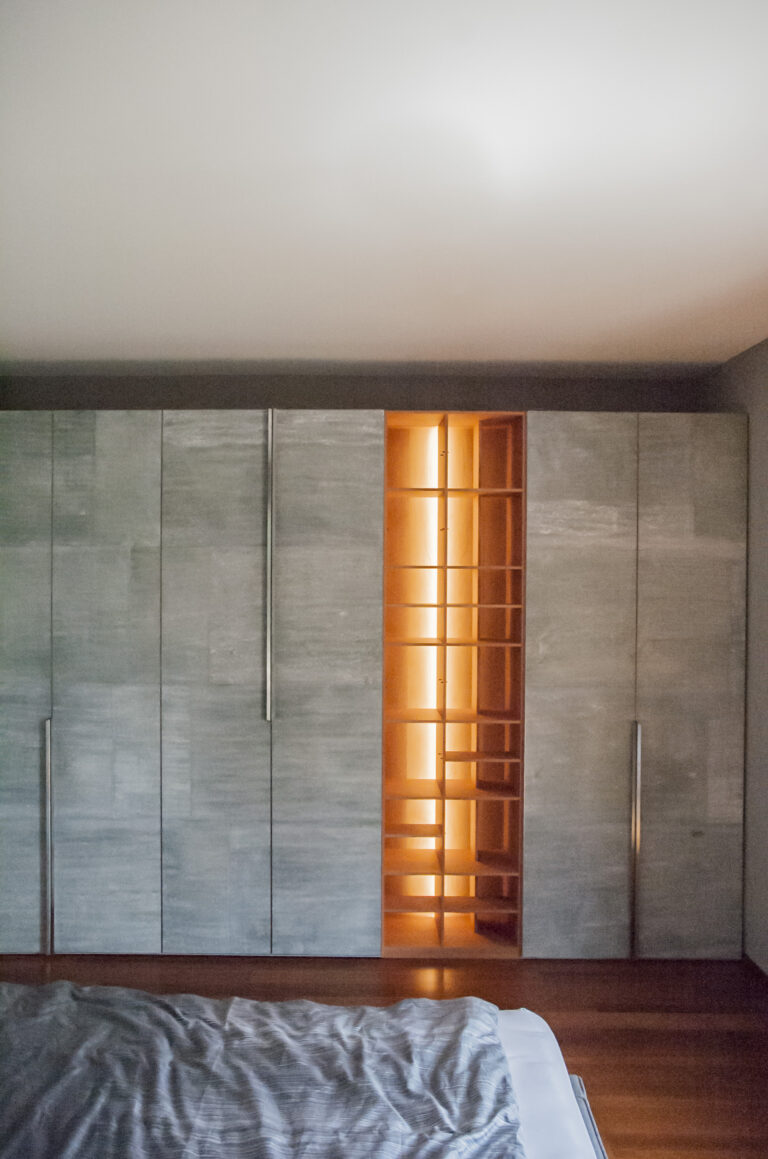
PALA, Storage wall
A built-in storage system defined by a balance between monolithic mass and inner lightness — a layered interplay of natural mineral surfaces and warm wood.
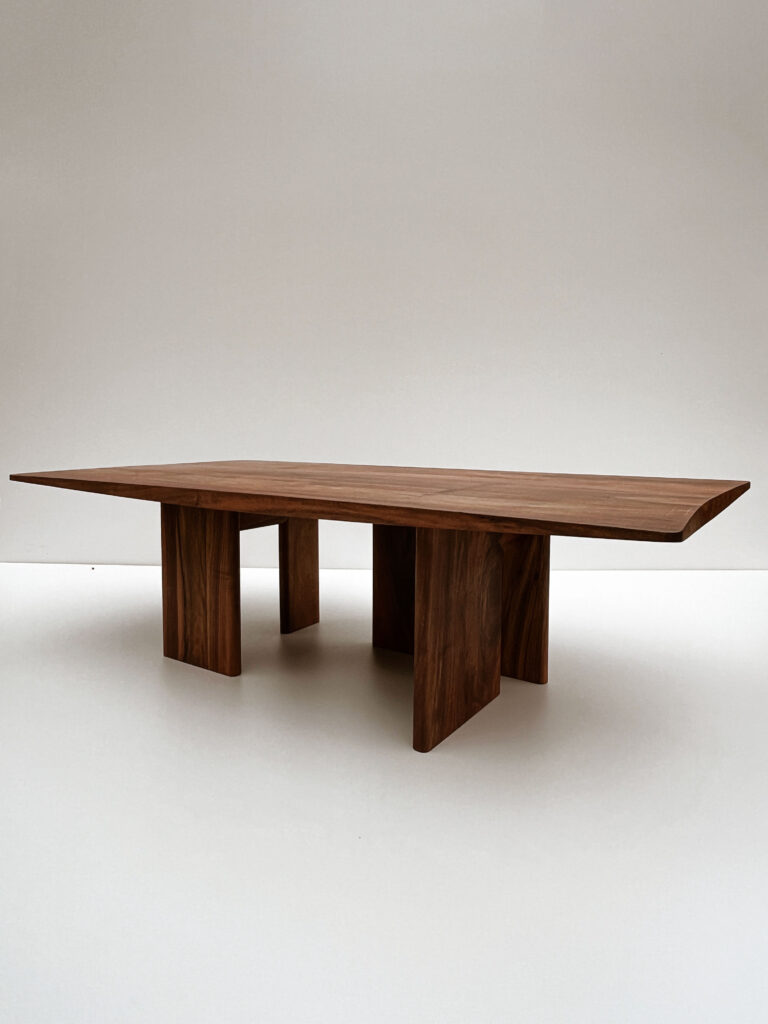
COVE, Coffee table
A table defined by balanced proportions and soft transitions — where solid mass meets a quiet sense of movement, offering a calm, timeless presence in any space.
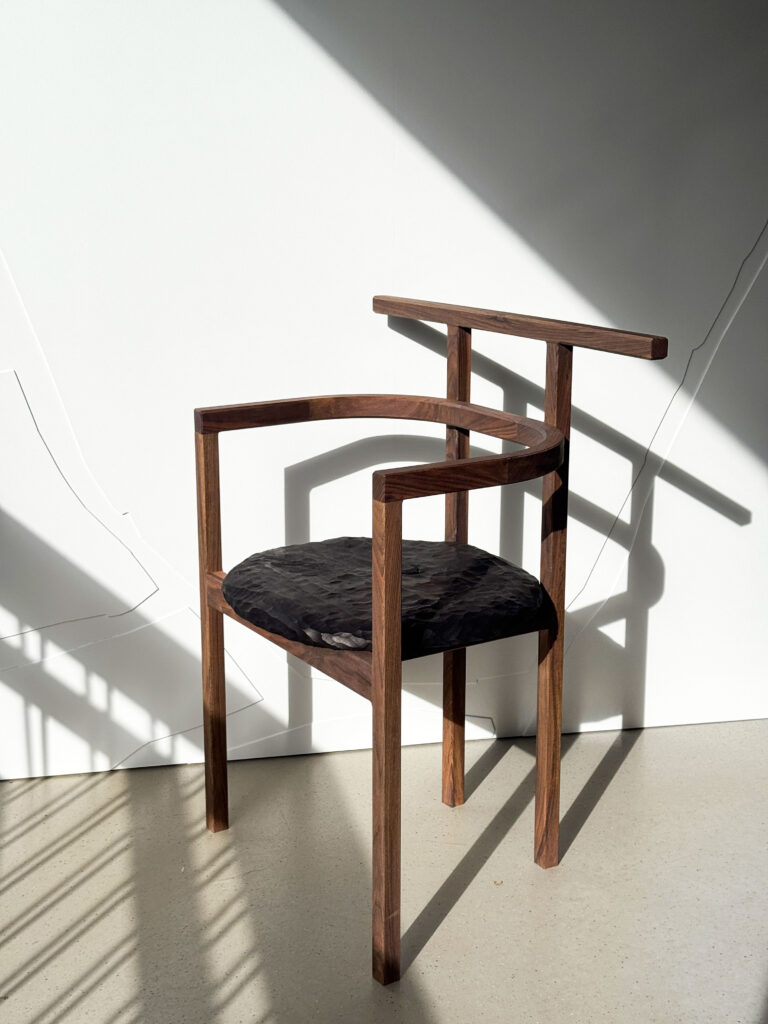
ENEH, Chair
A solid wood chair balancing precision and flow — defined by disciplined structure and a quiet, curved movement.
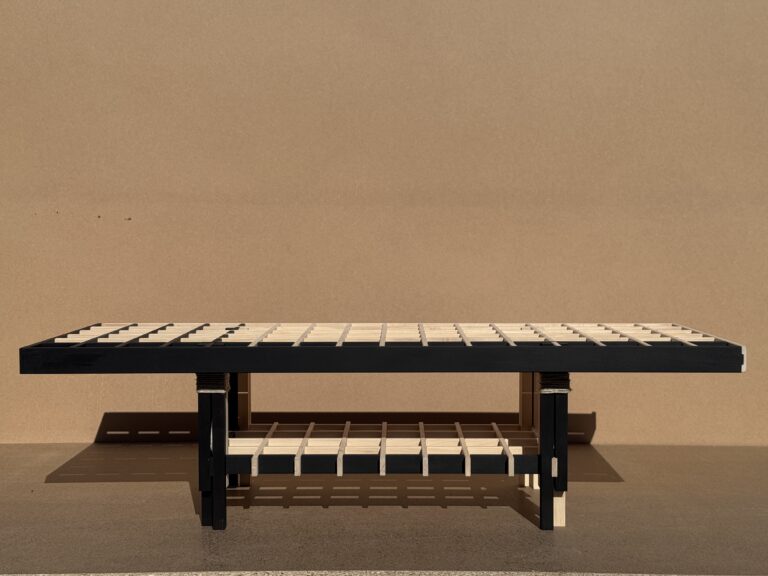
MATE, Coffee table
A solid wood side table defined by a light structural rhythm and material efficiency — balancing openness with stability.
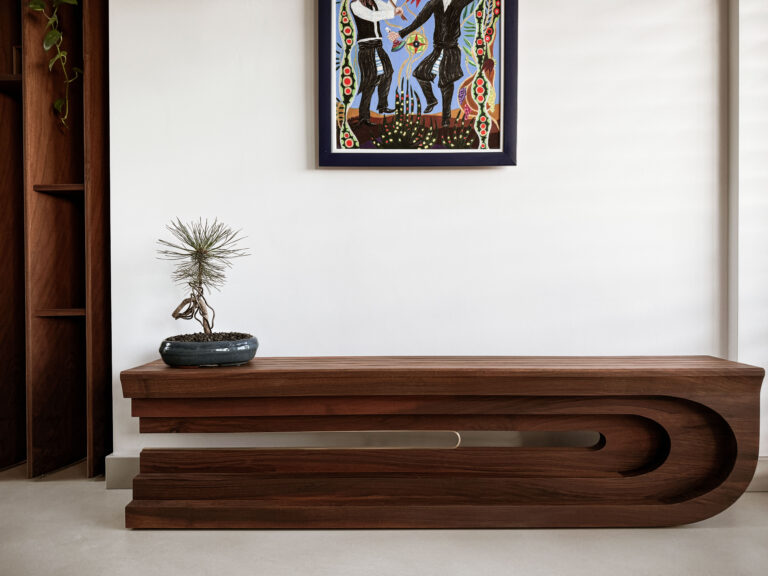
LAYING ROMAN, Sidetable
A solid walnut object balancing mass and suspension — defined by disciplined geometry and a deeply carved inner volume.