
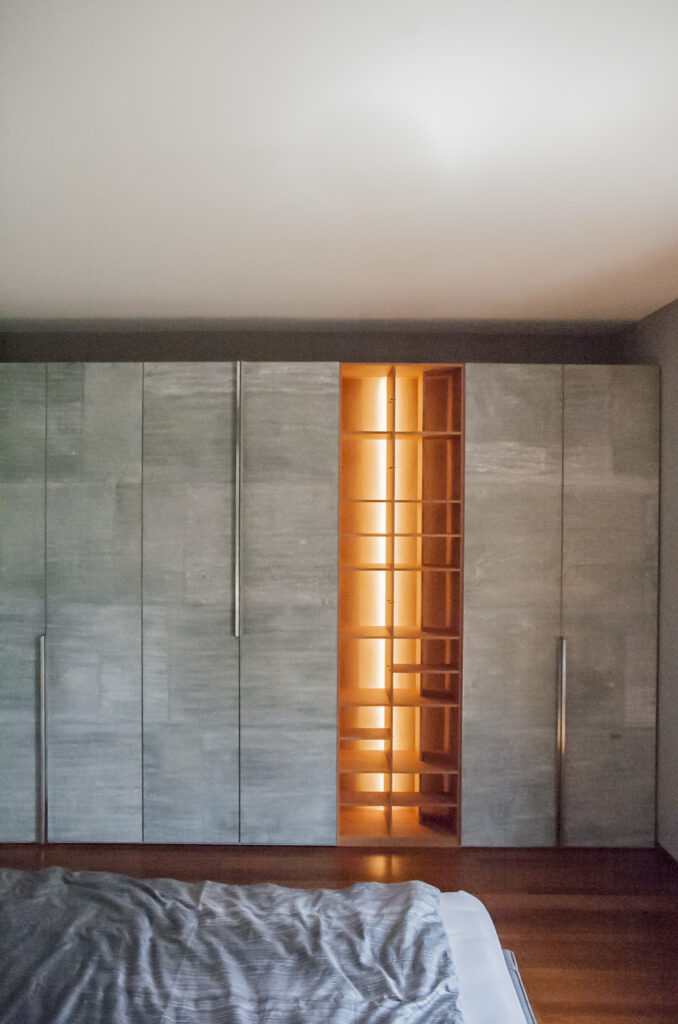
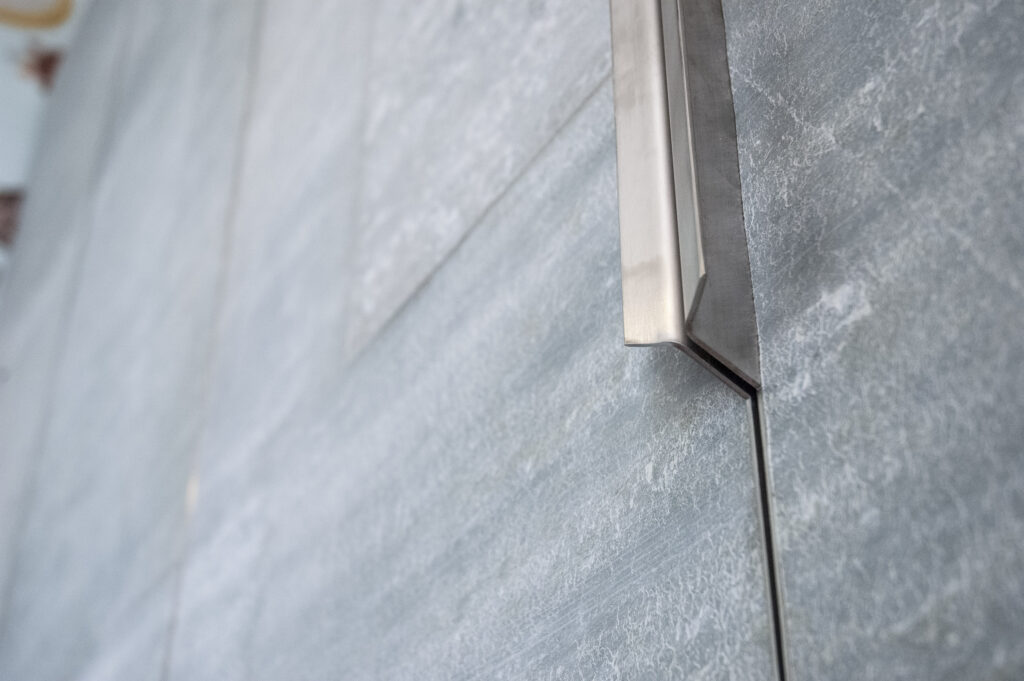
A surface that initially reads as a unified, closed mass. PALA stands as a calm, continuous façade — the natural grain of the stone veneer and the finely framed raw steel edges give it a restrained yet assertive presence. The surface does not fragment; instead, it opens at a certain point, as if the mass were separating, offering a glimpse into a warmer inner layer.
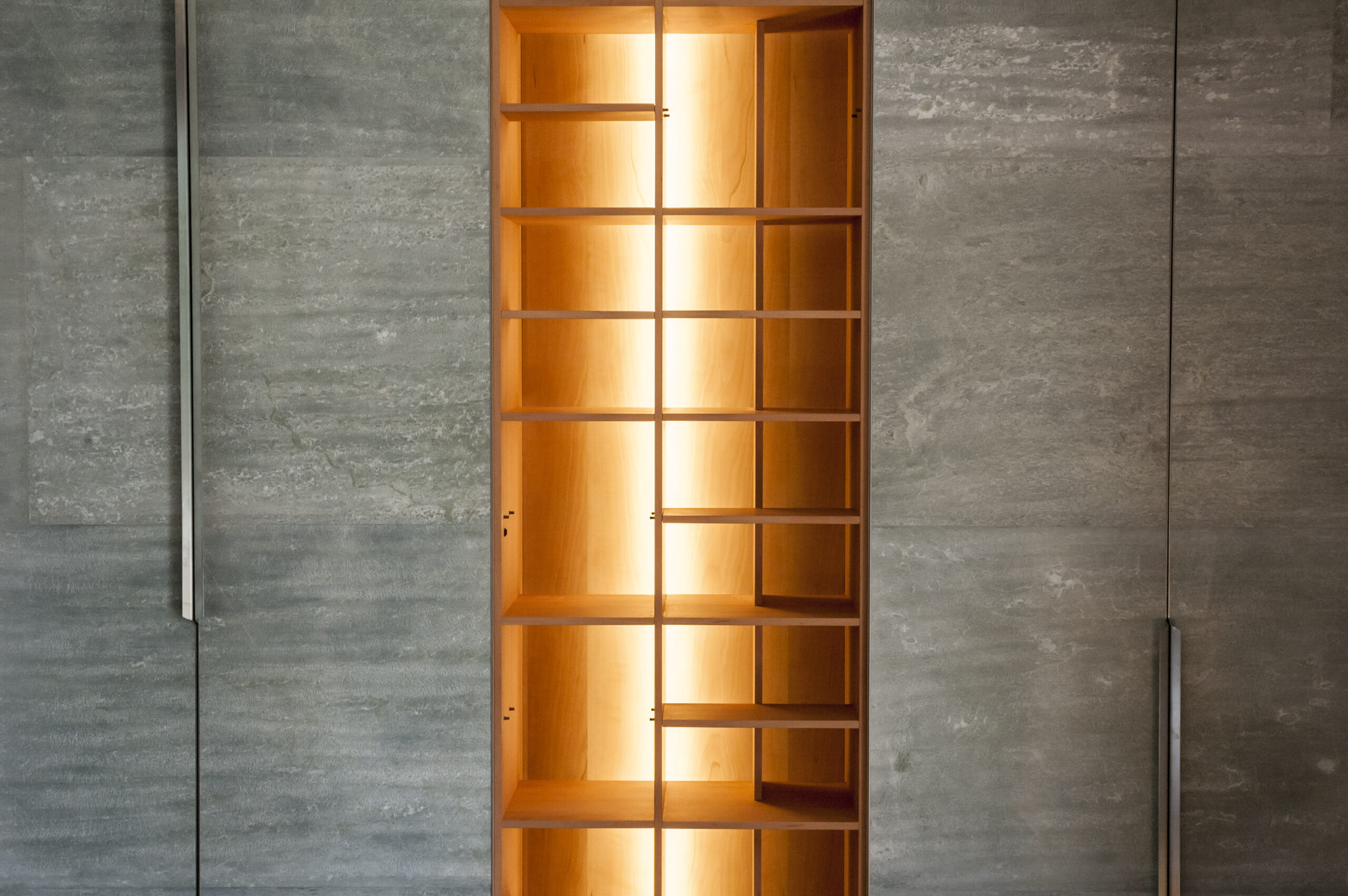
The system is conceived as an architectural element. In its closed state, the surface remains composed, yet carries a subtle natural movement. The pear wood insert, set between the stone-clad cabinet volumes, appears as an inner core — introducing a warmer tone and a finer scale to the composition. Indirect lighting further emphasises this layer, adding depth to the mass.
The internal wooden shelving system is freely reconfigurable, allowing for an organised yet varied arrangement of objects of different sizes. The stone veneer doors are framed by raw steel edges that maintain the continuity of the surface, while locally widening to allow access to the volume.
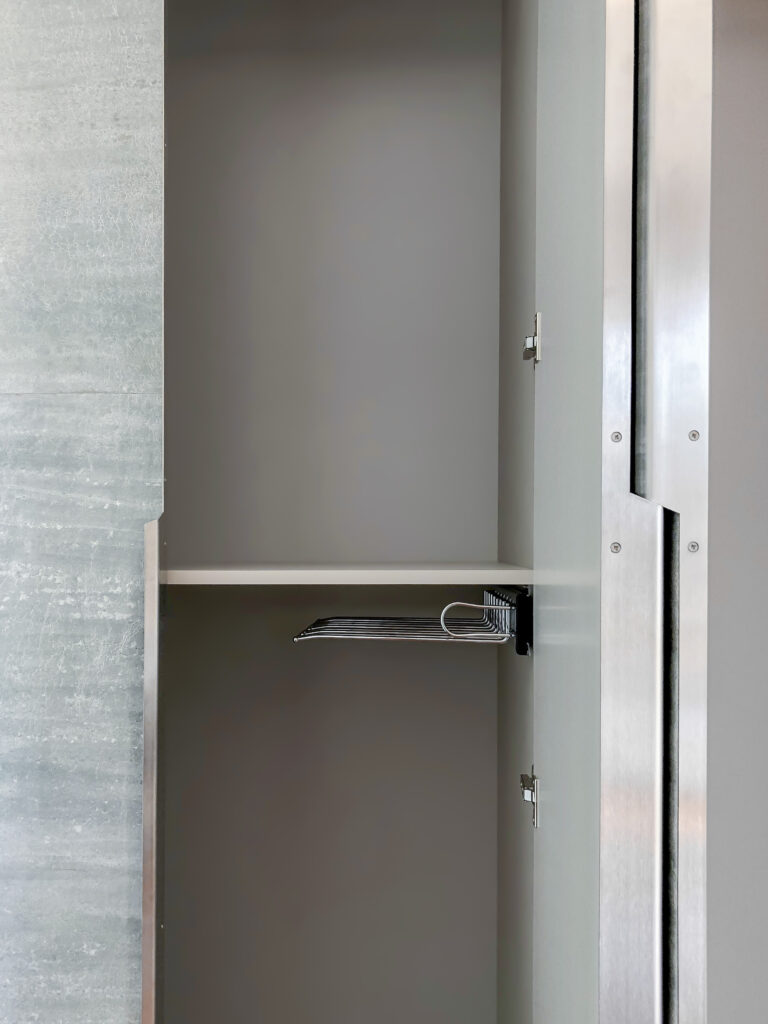
In the open state, the doors align into a defined, planar composition. Behind the dense outer layer, a different internal logic unfolds: a uniform, decorative-laminate carcass provides a restrained and practical backdrop, while the wooden structure continues to define the character of the system. The outer and inner layers do not represent the same quality — while the exterior is defined by enclosure and mass, the interior shifts towards a lighter, use-oriented order.
PALA finds its place in spaces where storage is not background, but part of the spatial composition. A surface that both conceals and reveals — establishing a quiet yet decisive order.
Our Other Products
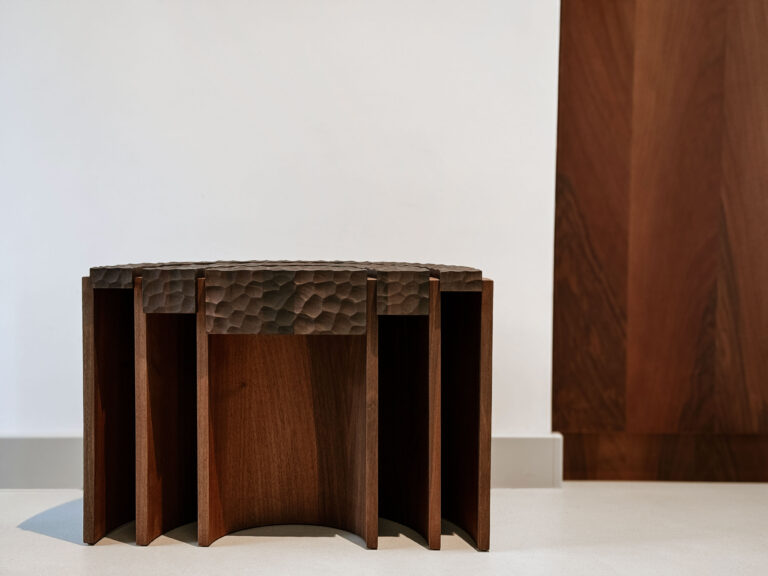
PLINTH, Postament / Bench
A compact object balancing solid mass with tactile softness — defined by natural rhythm and material depth.
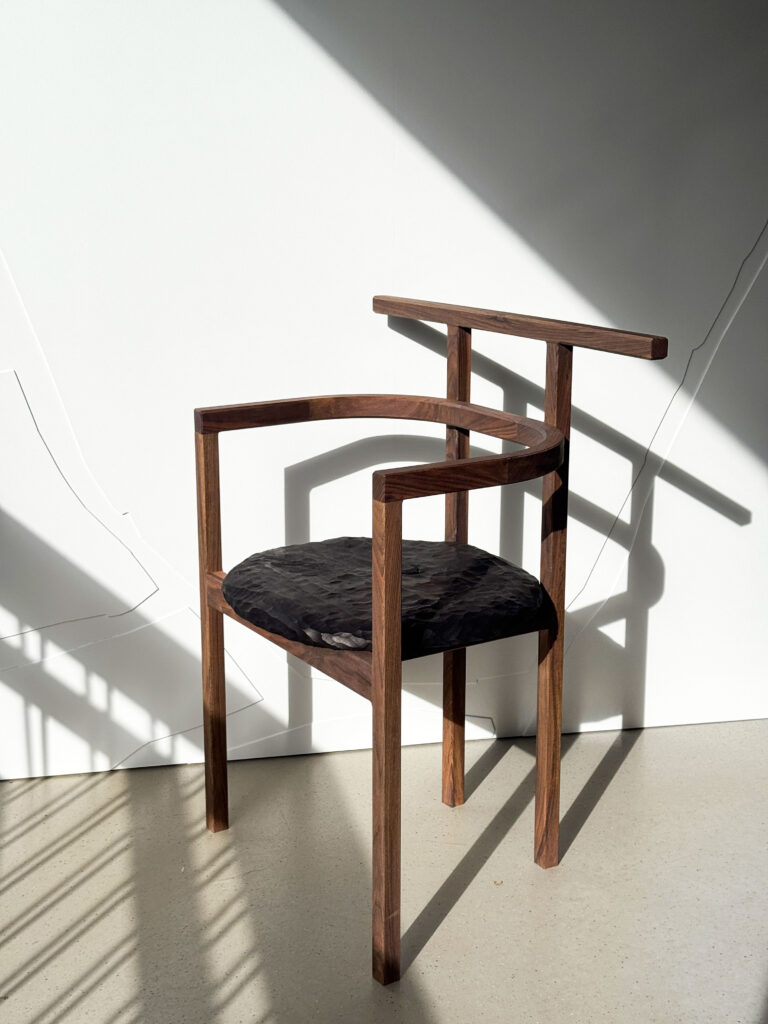
ENEH, Chair
A solid wood chair balancing precision and flow — defined by disciplined structure and a quiet, curved movement.
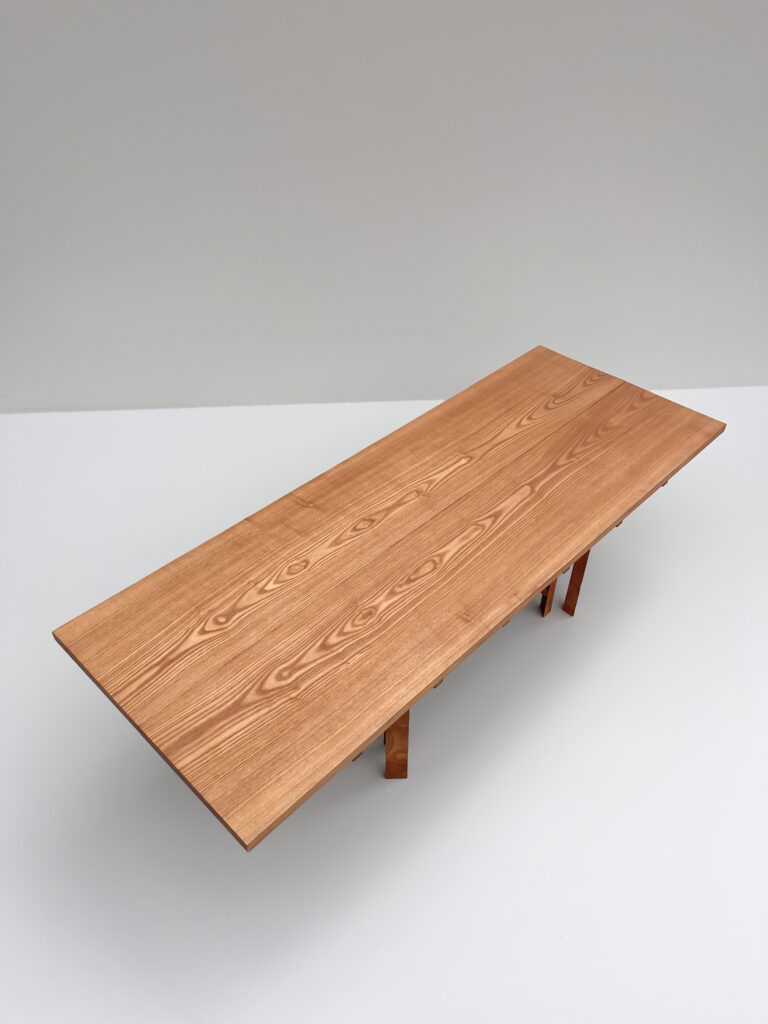
LEVI, Coffee table
A solid wood table defined by rhythmic structure, natural materiality, and a balance between weight and perceived lightness.
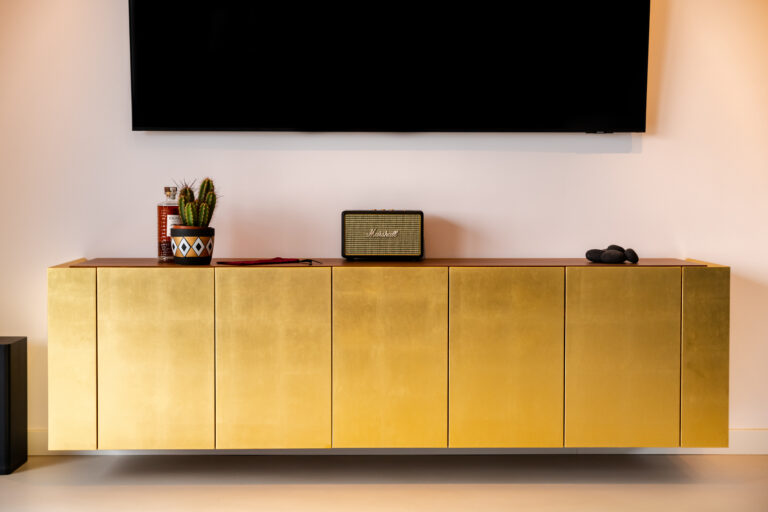
AU79, Console
The AU79 console is a balanced, material-rich piece, where gold, walnut and lacquered surfaces meet in a restrained contrast, forming a refined, quietly confident limited-edition object.
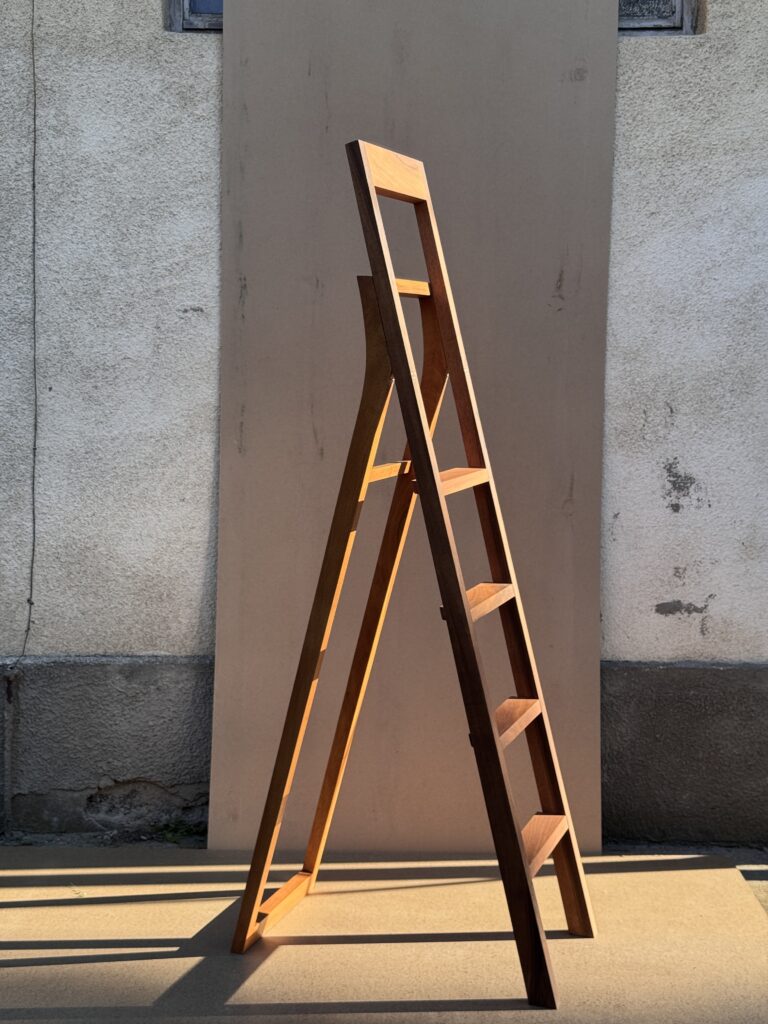
LIBRARIAN, Ladder
A solid wood and metal ladder defined by structural clarity, natural material contrast, and a balance between sculptural stillness and functional lightness.
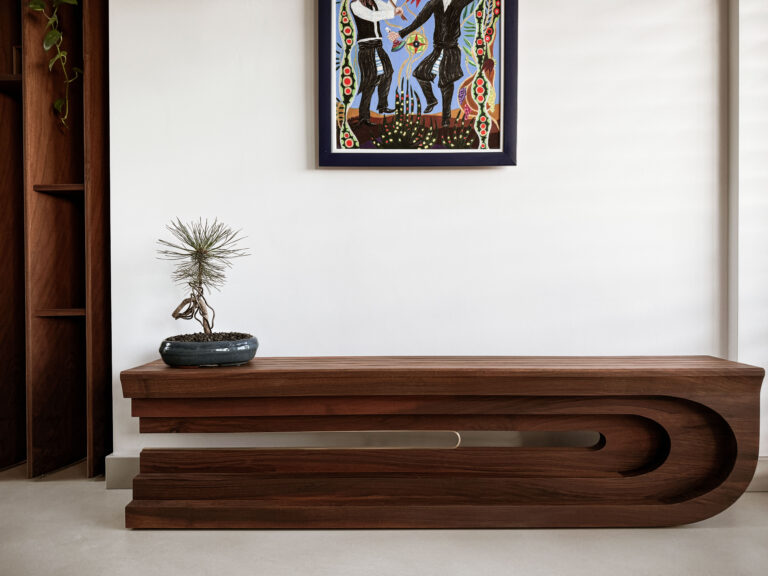
LAYING ROMAN, Sidetable
A solid walnut object balancing mass and suspension — defined by disciplined geometry and a deeply carved inner volume.
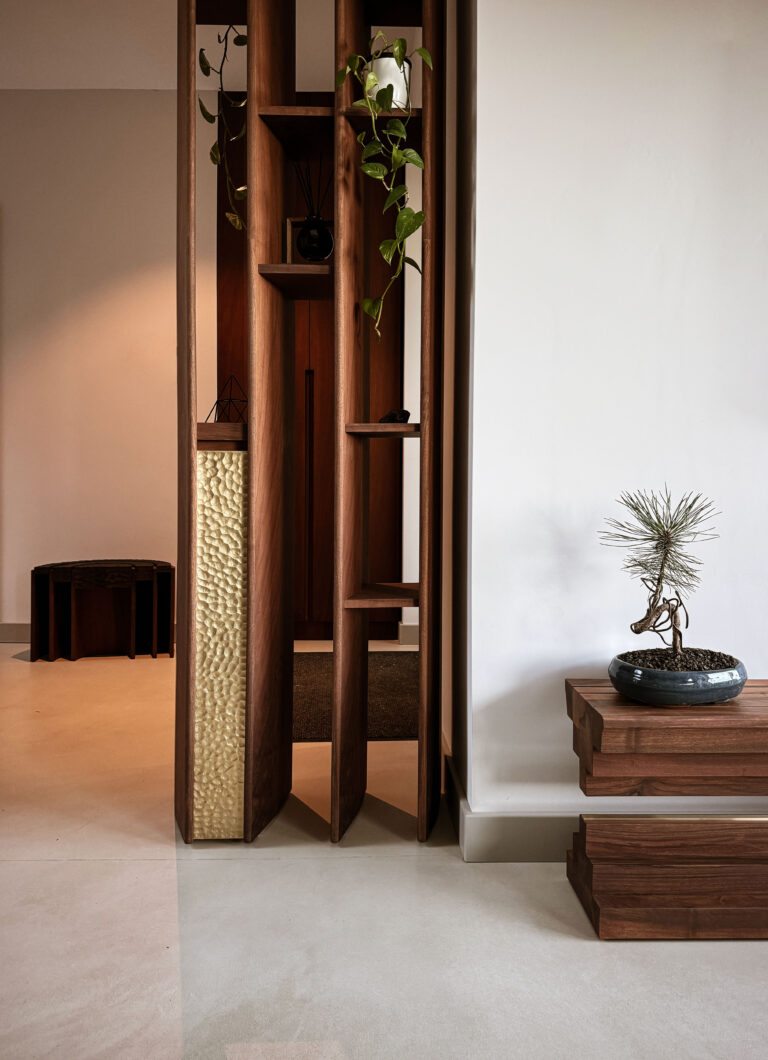
RIFT, Divider system
A vertical room divider defined by a refined structural rhythm, balancing slender lightness with a stable, grounded presence.
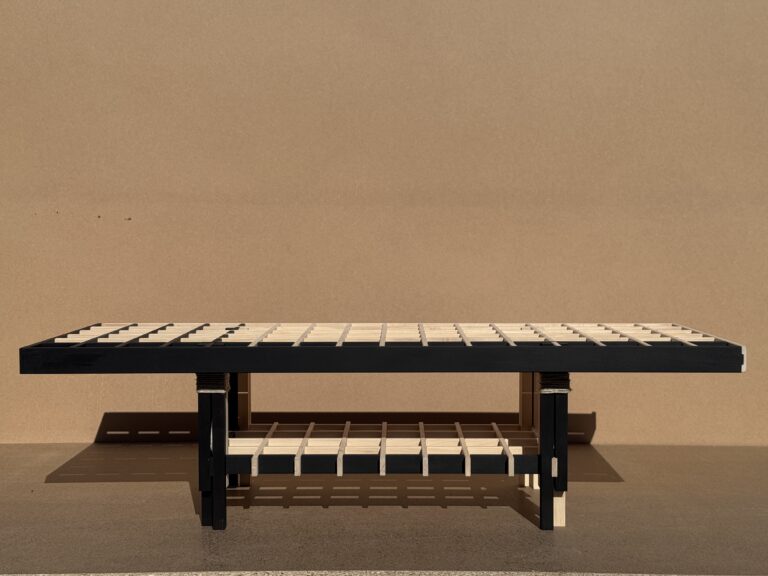
MATE, Coffee table
A solid wood side table defined by a light structural rhythm and material efficiency — balancing openness with stability.
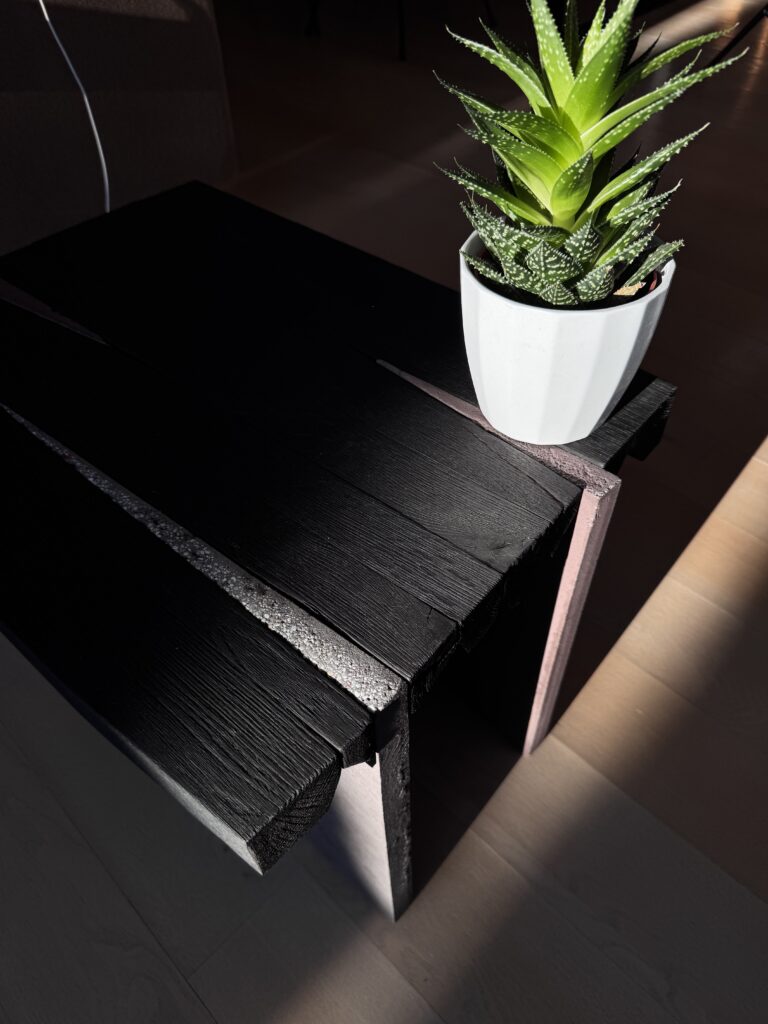
CARBON, Side table
An experimental side table defined by material contrast — balancing charred wood and raw concrete, surface and mass.
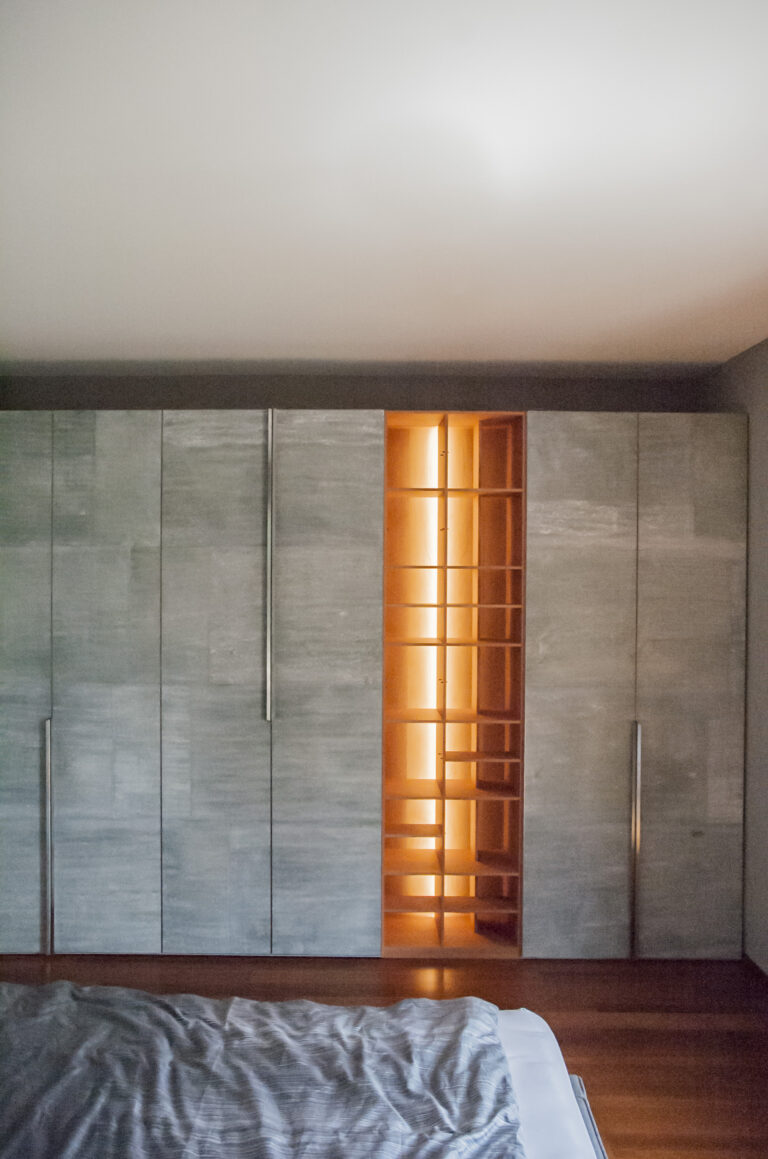
PALA, Storage wall
A built-in storage system defined by a balance between monolithic mass and inner lightness — a layered interplay of natural mineral surfaces and warm wood.
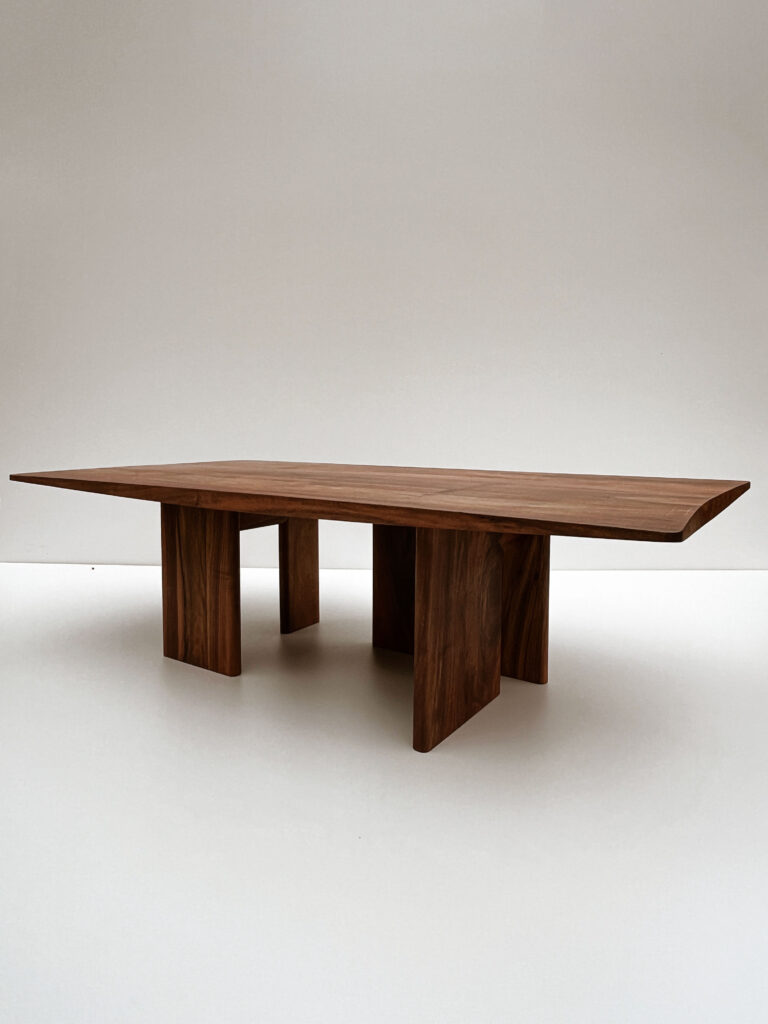
COVE, Coffee table
A table defined by balanced proportions and soft transitions — where solid mass meets a quiet sense of movement, offering a calm, timeless presence in any space.