
Alma Villa
Project designed by Dávid Ligeti
Bespoke designed and manufactured built-in furniture
Project overview
Alma Villa is an interior transformation of an existing house, where furniture is not treated as an addition, but as a defining component of the spatial character. The project builds on the presence of exposed concrete, layered with dark materials and developed through a gradually expanding design process.
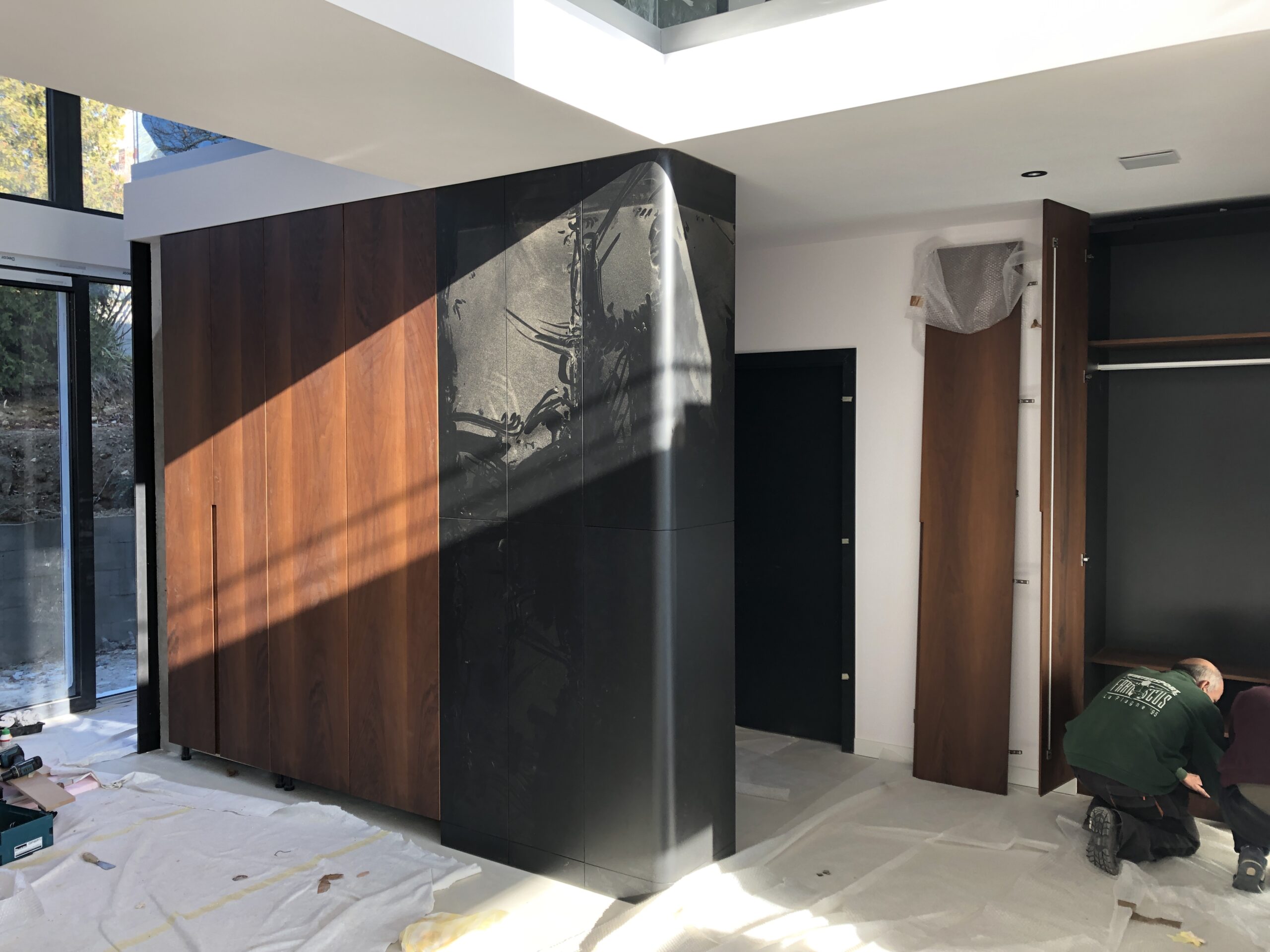
The project originated from an existing structure, where the raw concrete framework established a strong architectural foundation. In response, a darker, more grounded material palette was developed, built around stained and oiled walnut, black surfaces, and technical stone. This base layer is subtly articulated by the presence of brass and gilded elements in the entrance and living areas.
Rather than being defined by a fixed, comprehensive concept from the outset, the project evolved progressively. As the scope expanded over time, each intervention responded to the previous one, allowing the interior character to develop layer by layer. This process created a condition where design decisions remained open, yet increasingly coherent.
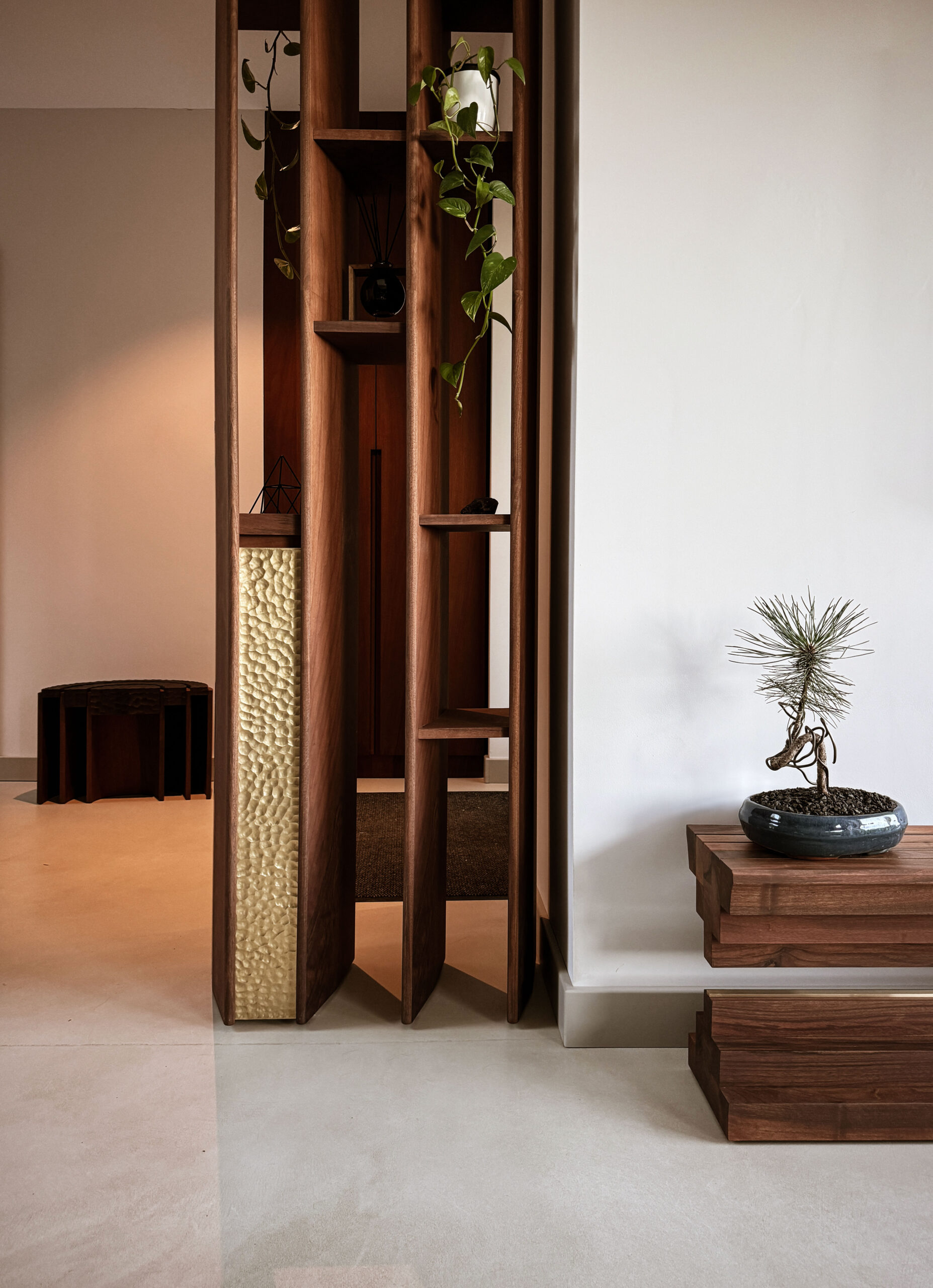
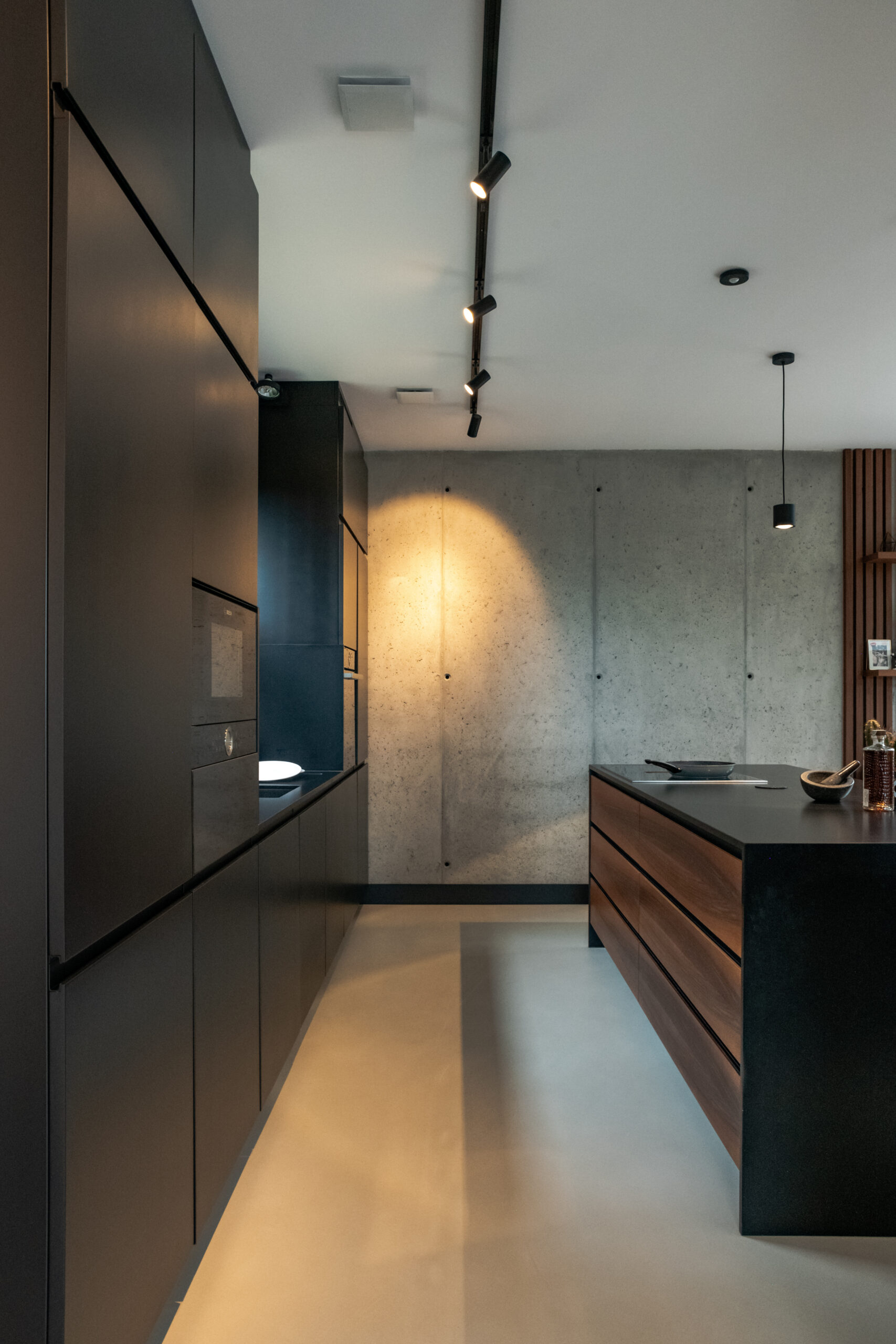
Furniture plays a primary role within this system. The living room elements, the double-sided entrance storage and partition wall, the kitchen and display units, as well as the bedroom and wardrobe systems, were all conceived as part of a unified approach. The kitchen was developed based on the designs of Tamás Mácsai and integrated into the overall spatial logic.
Material use allowed for a degree of exploration. The relationship between wood, stone, metal, and glass is layered and deliberate, while specific details — such as the floating display cabinet or the ceramic inserts in the bathroom — contribute both functionally and visually to the overall composition.
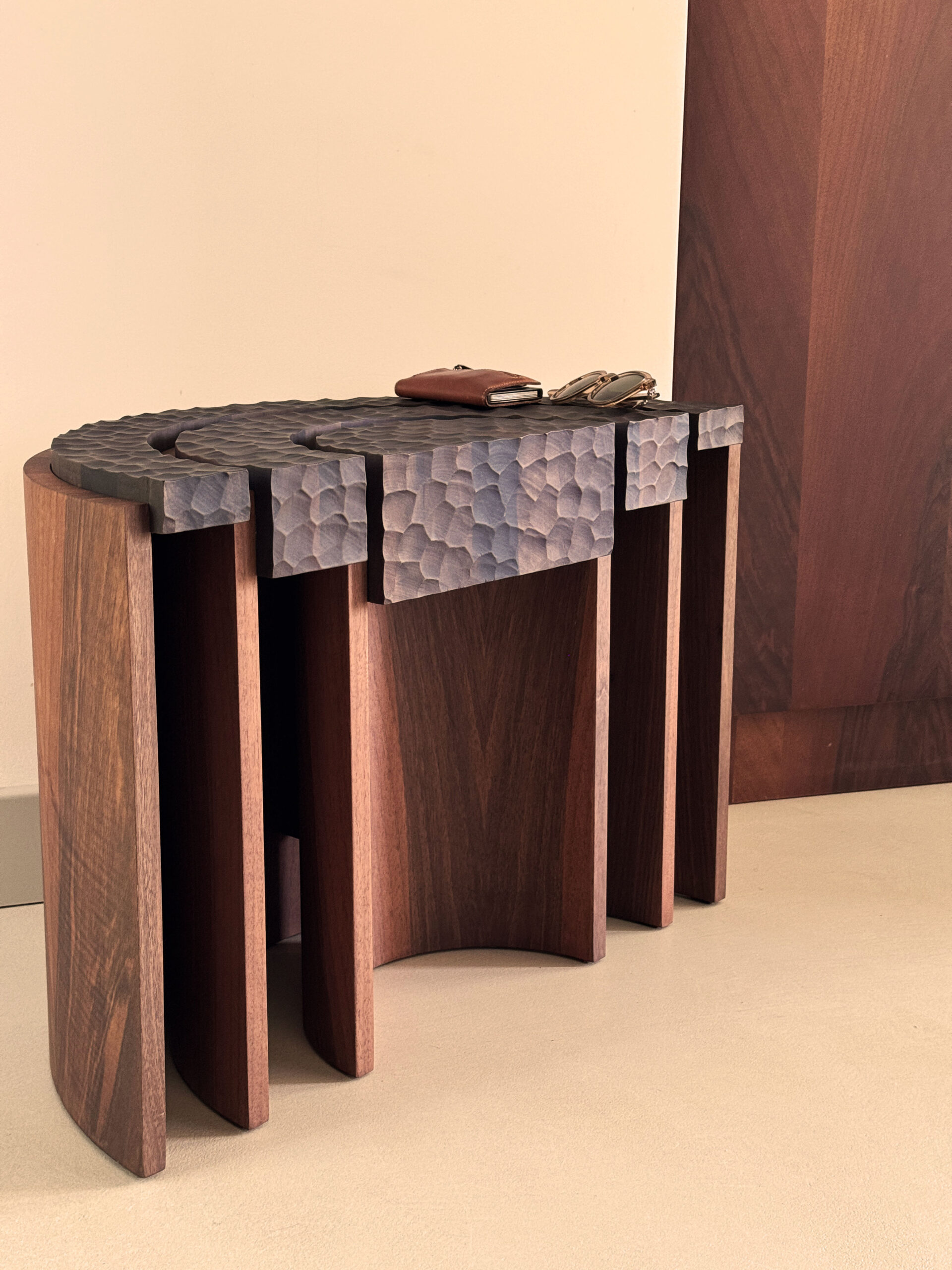
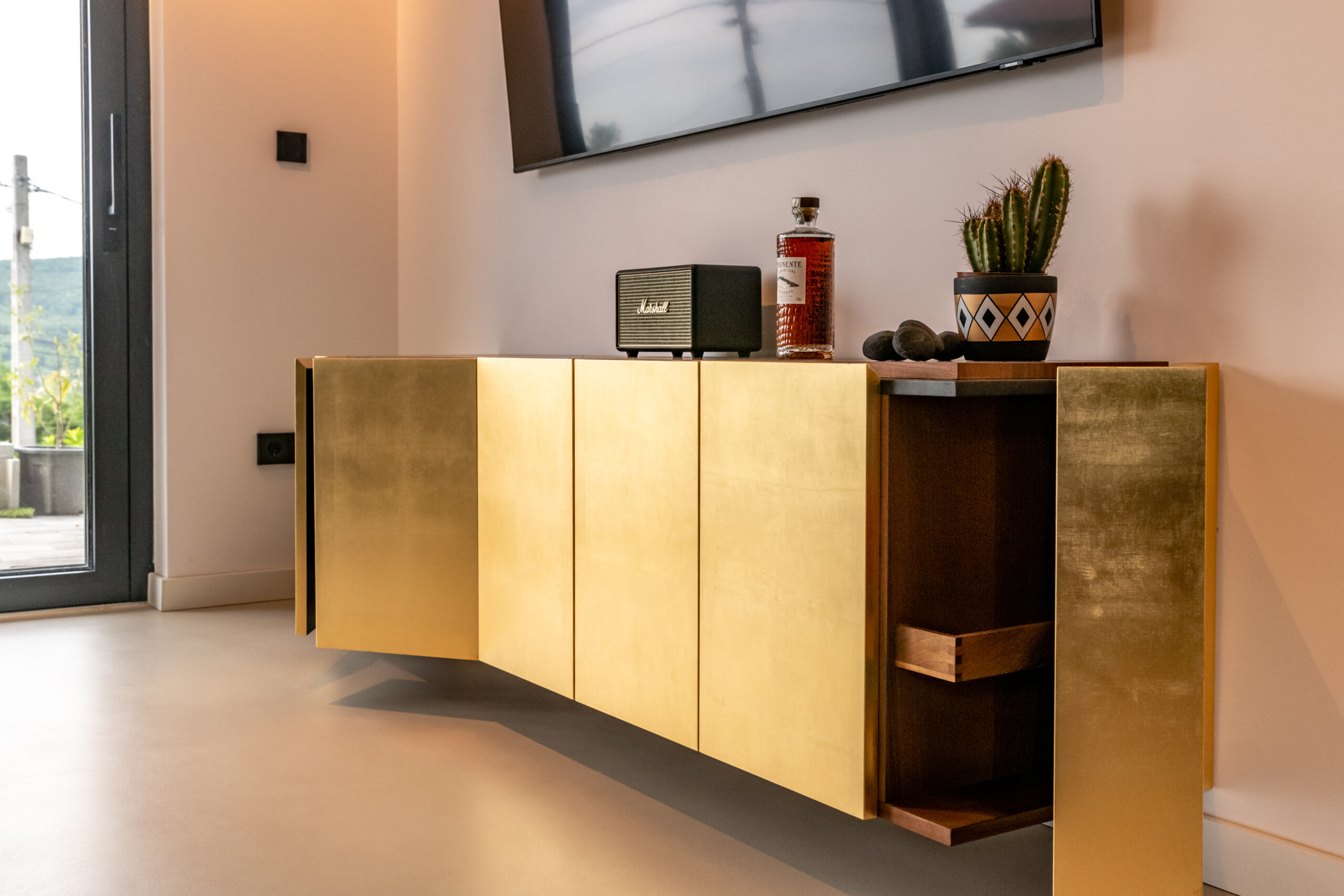
The result is an interior shaped through accumulation rather than imposition — where successive decisions form a coherent whole, and where furniture becomes an active agent in defining both the structure and atmosphere of the space.
Key Considerations
An Evolving Design Process
The project did not follow a single predefined concept, but developed progressively, allowing individual decisions to align into a coherent system over time.
Furniture as Spatial Structure
Furniture elements are not secondary additions but primary tools of spatial organisation, shaping relationships between zones and functions.
Material Strategy
Raw concrete, dark walnut, and black surfaces establish a dense, textured base, complemented by brass and gilded accents that introduce contrast and refinement.
Custom Details
Elements such as the floating display cabinet and ceramic-backed handles demonstrate how technical solutions and visual qualities are resolved within the same gesture.
Integrated System
Spaces and functions are interconnected through a consistent design logic, resulting in a unified and layered interior environment.